Tag Archives: starbuckssucks

xBloom Studio Review: I Let a Robot Make My Coffee and I Have No Regrets

The xBloom Studio. I bought it. I’m not sure if this is a triumph of engineering or a sign that I’ve finally, completely surrendered to the machine. Literally. You see, I’ve spent years perfecting my pour-over technique. The careful blooms, the deliberate pours, the ritual. And now I’ve handed all of that — every single variable — to a robot. And the robot, it turns out, is better at it than I am. Or at least, more consistent. Which, when you think about it, is both deeply satisfying and mildly humiliating.

What the xBloom Studio Actually Is

It’s an all-in-one pour-over machine with a built-in grinder, a precision scale, and a phone app that connects via Bluetooth. The ecosystem also includes xPods — little pods of whole bean coffee (whole bean, not pre-ground, which matters enormously) sourced through partnerships with specialty roasters. Each xPod comes with an NFC recipe card: tap it to the machine, and it loads the brew recipe the roaster designed specifically for those beans. Not a generic “medium roast” profile — the actual intended recipe, dialed in by the people who grew and roasted it. You open the xPod, put the beans in the grinder, put the pod on the docking ring (it’s also the brew filter), tap the recipe card to the top of the machine, and the machine does the rest — grinding, blooming, pouring, the whole ceremony. Three modes: Autopilot (fully hands-off), Copilot (you pour, it guides), and Freesolo (manual, like a very fancy kettle stand). For someone who has spent a decade obsessing over this stuff, the Autopilot mode is both a relief and a small identity crisis.

What actually made me pull the trigger was a business trip to LA. I walked into Intelligentsia in Hollywood and there was one sitting behind the bar. I asked what the deal was — this did not look like standard café equipment. The barista told me they’d moved on from their previous high-end automated pour-over setup and had been running the xBloom in its place. I’ll leave the details out of it — it wasn’t my story to tell. But a specialty coffee institution making that swap, replacing a machine that costs multiples more, with this thing? That was enough for me.

The custom recipe programming sealed it. I have dialed in my pour-over technique over years of iteration — specific bloom volumes, specific temperatures per pour, specific wait times. I can now replicate exactly what I do by hand, with perfect repeatability, every single morning, while I stand there staring blankly at the wall waiting for the caffeine. Set it and forget it. It’s the dream.


The NFC Card Situation (or: A Good Company Handling a Bad Thing Well)

The machine ships with a sample supply of xPods — whole beans from a partner roaster (Galactic blend is what I got), plus an NFC recipe card that tells the machine exactly how to brew them. The concept is genuinely great. My NFC card, however, was dead on arrival. The machine couldn’t read it. Not a great first impression, I’ll be honest.

But — and this matters — xBloom’s customer support got back to me quickly. The box also includes a separate generic NFC card with a baseline recipe, which I was able to use to confirm the machine itself was perfectly fine. The bad card was with the included beans, not a machine problem. And the recipe for those specific beans was available in the app anyway, so I was still able to brew them while I sorted things out. Minor annoyance, handled well. I’d rather see a company respond fast with good communication than never have a hiccup at all. The former tells you something real about them.


The App: Mostly Good, Two Specific Gripes

The xBloom app is genuinely well-designed. The recipe library is extensive, the community sharing feature is a nice touch (see below), and the level of control you have over brewing parameters is impressive for what is ostensibly a consumer appliance.

That said, two things:

Search is not obvious. I spent longer than I care to admit looking for the search function. It’s there. It works. But it’s not where you’d instinctively look, and for an app whose value is largely in discovering recipes, that’s a meaningful friction point.

Recipe creation sliders are fiddly. When you’re building a recipe, you adjust parameters by pressing and dragging sliders. Getting a precise one-unit change — say, moving grind size from 54 to 55 — is an exercise in patience. They really should let you just tap the displayed value and type in a number directly. This is not an exotic ask. This is basic UX. Hopefully a future update addresses it, because the recipe customization is otherwise excellent.


My Recipes (Steal Them)

These are the recipes I dialed in to replicate my own hand pour-over technique. Both use a 1:16 ratio with 16g of coffee to 256ml of water. They’re three-pour recipes. Use them, share them, judge me if you disagree with my temperatures.

If you want to go further down the rabbit hole, xBloom’s Collective recipe hub is worth a browse — it’s the community library of shared recipes I mentioned earlier in the app section. Recipes organized by bean, roast level, and brewing style, submitted by other users. Useful for getting your bearings even if you end up customizing everything yourself anyway.

Light Roast Base

ParameterValue
Dose16g
Total Water256ml
Ratio1:16
Grind Size54
Bloom56ml @ 95°C — wait 36s
Pour 2100ml @ 95°C — wait 30s
Pour 3100ml @ 88°C

→ Load this recipe in the xBloom app

Medium Roast Base

ParameterValue
Dose16g
Total Water256ml
Ratio1:16
Grind Size58
Bloom56ml @ 90°C — wait 15s
Pour 2100ml @ 90°C — wait 30s
Pour 3100ml @ 85°C

→ Load this recipe in the xBloom app


Verdict

The xBloom Studio is genuinely impressive. If you are a pour-over person who wants automation without sacrificing control — and who is willing to invest the time to dial in your own recipes — it’s hard to beat. The grinder is solid, the scale integration is seamless, and the repeatability is everything it promises to be. My morning cup has never been more consistent, and I’ve never had to think less about it. That is, depending on your perspective, either a tragedy or a triumph. I’m choosing triumph.

Fix the slider UX, xBloom. Everything else: keep doing what you’re doing.


Get One

Available on Amazon in several colors. I went Midnight Black, because of course I did.

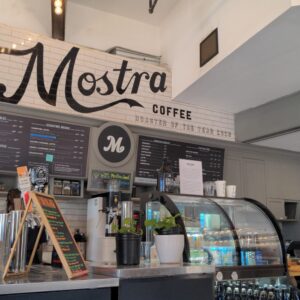
Mostra Coffee 4S Ranch

Counter at Mostra

I spent the morning at Mostra Coffee’s 4S Ranch Location. Mostra has been around in San Diego for a while now, and has added a few cafe locations in the Rancho Bernardo area. The coffee is very good. It’s pretty typically 3rd wave, but I did not find it to be overly acidic or tart as is sometimes the case. The flat white I had was creamy and flavorful. They have free WiFi and the location has indoor and outdoor seating. The location is in a corner of the 4S Ranch Commons .

A brief word on Espresso

Espresso (not Expresso)…gotta get that in as many times as I can. Many new folks on their first roasts post photos of a very dark, Starbucks like roast. Let me get it out of the way now, that this is not a crime and not bad in any way. Deciding to learn to home roast takes time, and even a beginners first roast that was taken a little too far will most likely be better that Starbucks!.  Inevitably, there is a follow up comment on forums to try it as Espresso.
So, my question is why?
Here’s my 2 cents on subject. I think everyone knows that espresso (not expresso) is not a roast profile, or a specific bean. It’s a process – a method of production and you can put any roast profile you want through it. Yes, a darker bean is more soluble than a light roast, but still…we all know what Starbucks espresso tastes like…so why would we voluntarily want to brew that at home?
I light roast can make a wonderful espresso (albeit, I’ve only ever had one I liked), but like *any* brewing method, you will need to dial in the grind and brew time params accordingly. I brew mostly espresso at home (Gaggia Classic and a Bezzera BZ10). The single biggest leap in quality after the grinders and machines was when I started just roasting for the flavor profiles, and not worrying about dark/light. I blended beans for the balance of aroma, body, sweetness, chocolate, etc. that I was after. When I was done, I had not only the espresso I wanted, but a damn good cup of coffee period.

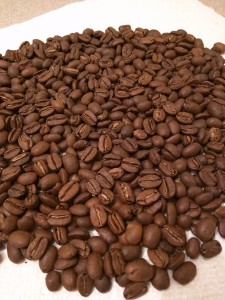
Full City+ Roast
Full City+ Roast from the FreshRoast SR700

Ultimately, you drink what you like, and that’s the great thing about being competent in food prep…you eat/drink what you like all the time. So, if a dark roast for espresso is something you like, brew it up and don’t look back. But, don’t assume that a dark roast will work as brewed espresso.
Of course, that’s just my opinion, I could be wrong (apologies to Dennis Miller).

Laughing Man Coffee & Tea

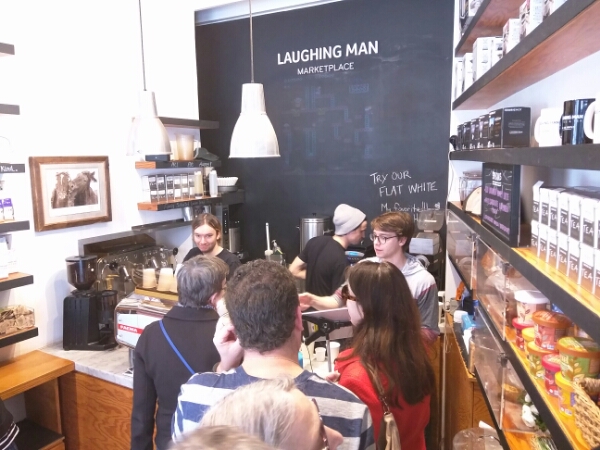
I finally got down to Tribeca to Hugh Jackman’s place Laughing Man Coffee & Tea.  If you saw his documentary “Dukale’s Dream”, this is the place that came out of the coffee journey he documented.

Laughing Man Coffee & Tea

Located at 184 Duane St (there is now another location further West by the water as well), the place is tiny and had a healthy line on a Saturday at noon.  One might expect this give the fame of the founder, but they make a very good cup of coffee!  And, it seems there’s a good supply of “regulars” as the baristas acknowledged several folks as they walked in the door.

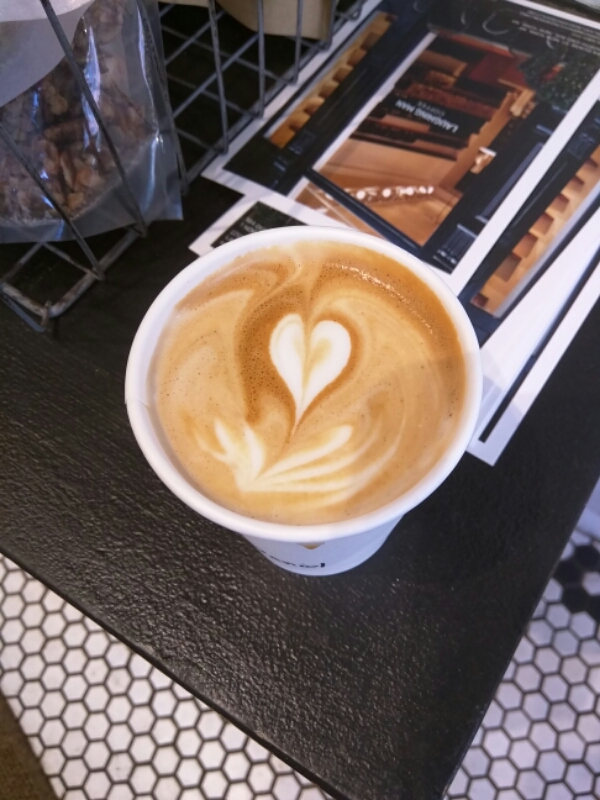
I had a flat white, a favorite in Australia, Hugh’s native land…how could I not (Hugh even has a note on the chalk board behind the bar suggesting it’s his favorite.)

image

The espresso, a blend of Ethiopia, Indonesia, and Costa Rica (according to the barrista) shines through nicely.  The winey pop of the Dukale’s Ethiopian comes through the milk very well.  It is honestly one of the better milk based drinks from a bar I’ve had in New York.

Even though the inside is tiny, just outside is a small city project called Street Seats.  If the weather is nice, it’s a wonderful place to enjoy your coffee.  It’s an easy walk from either the 1,2,3 or A,C Chambers Street stops.  If you are in the area, give it a try.

Home Roast Sumatra

Sumatra Iskandar won some awards this year.  So I picked up a few pounds to home roast.

Roasted with FreshRoast SR700 to Full City+

This batch was roasted 20 sec into a rolling second crack.  It came out excellent.  Brewed as a single origin espresso, it had all the body you would expect.  It was thick and syrupy, with mild sweetness and a touch of acidic tang to wake up the mouth.  I regularly use 25% Sumatra in my “go-to” espresso blend, and this bean again showed me why I do it.

As an Aeropress brew, this was also outstanding.  The cup was exceptionally smooth and not bitter at all.  The sweetness was perhaps more pronounced than in the espresso preparation and the aroma had chocolate notes to it.  The thickness of the body noted in the espresso preparation was also very noticeable.

#starbuckssucks

Home Roasting – Never Buying Roasted Beans Again

I’m now 2 weeks into my home roasting adventure, and I’m never buying pre-roasted beans again.  Don’t get me wrong, there’s small batch roasters out there that are insanely good.  But, for less than 1/2 the price, and still making mistakes, I’m producing product that I would happily stand up against some of the best cafes in town.  The crema is thick and colorful.  And, possibly most important, the shots taste almost exactly as they smell.  The blend I’m working with is producing balanced caramel sweetness with bakers chocolate flavors, and it’s thick and luxurious.

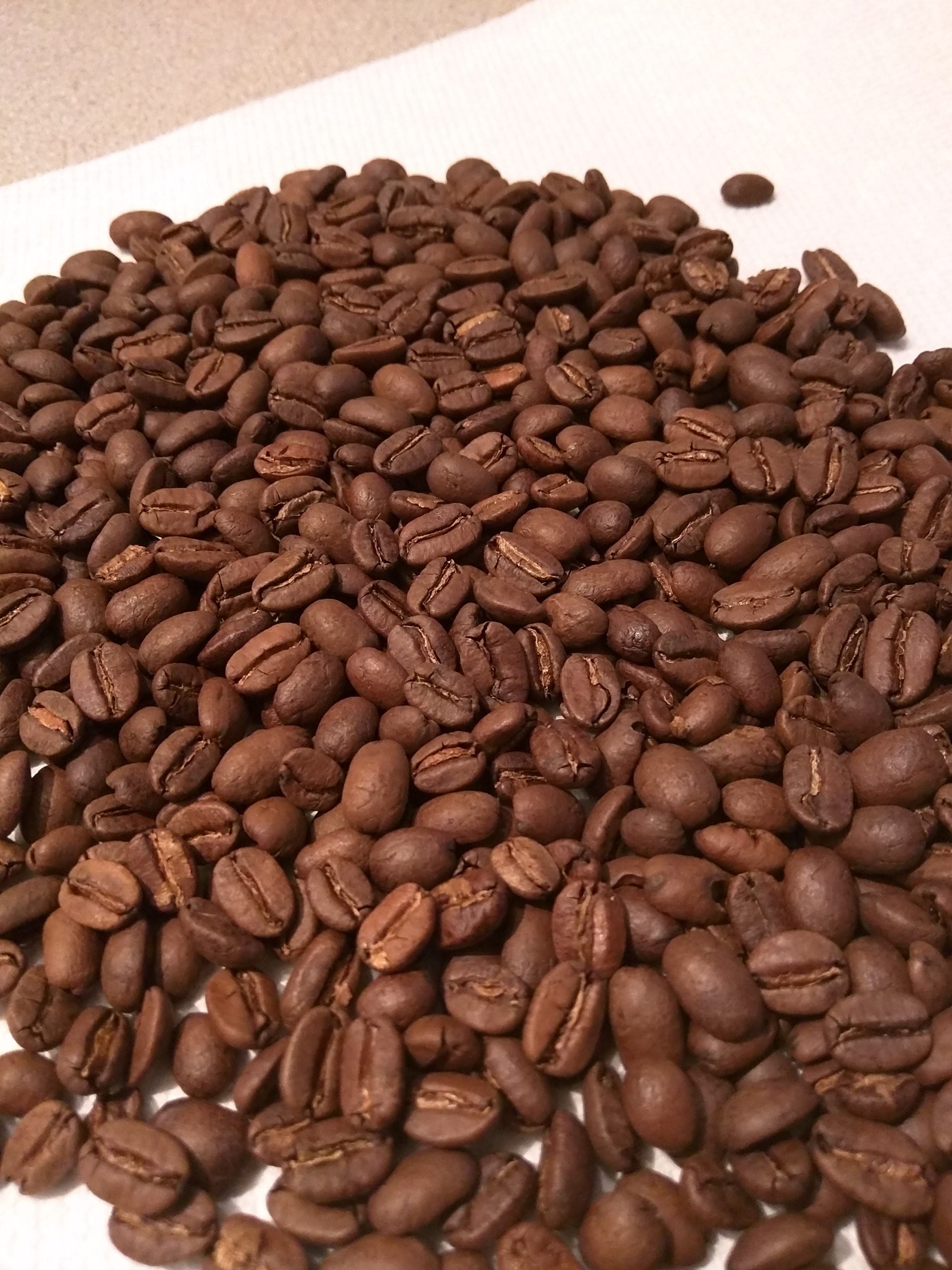
Full City+ Roast
Full City+ Roast from the FreshRoast SR700

The aroma of fresh roasted coffee is through the roof, the taste completely ridonculous (sic) – a religious experience.  Home roasting coffee guarantees all this never is out of reach.  Did I mention the cost savings?  It costs me roughly 1/2 as much to be home roasting my own coffee.  If you are a serious coffee drinker, you could probably pay for a vacation every year with the money you save.

If you saw the precious post, you saw that I’m using a FreshRoast SR700.  The one consistent knock on the FreshRoast machines in reviews around the internet is batch size – too small.  Yes, you can only roast 4oz at a time (final yield about 3.2oz per batch).  But, the flip side is that each roast is about 10-14 minutes.  So, you have almost a pound with an hour of home roasting.  Let’s be honest here…is it really such a terrible thing to spend an hour home roasting coffee?  You can geek out as much as you want on the science of it.  Analyze each roast.  Tweak recipes.  Oh, and did I mention the cost savings (again)?  Buy some exotic beans.  Try some new coffees!